
Ongoing Support For Breathing And Daily Life
Living with a chronic lung condition can change how you approach everyday activities. Walking through a store, getting dressed, or completing household tasks may require more time and rest than before. At Peak Medical, we provide COPD and chronic lung disease management in St. George, Utah, with attention to how your breathing affects your daily life. Our providers listen to your concerns, review your current treatment, and help you understand which changes deserve further evaluation. We want your appointments to address the difficulties that matter most to you.
As part of our Chronic Disease Management services, ongoing lung care connects symptom monitoring with your broader healthcare needs. We consider your medical history, previous testing, medications, and care received from other providers when discussing next steps. Whether you have an established COPD diagnosis or need evaluation for persistent breathing concerns, we take an individualized approach. Regular follow-up creates opportunities to review your progress, discuss treatment difficulties, and clarify when additional testing or specialist care may be appropriate.
Understanding Your Symptoms And Treatment Needs
A useful assessment starts with understanding what is usual for you and what has changed. We ask about cough, mucus, wheezing, shortness of breath, and the activities that have become more difficult. Your history of respiratory illnesses, smoking, workplace exposures, and previous lung testing also helps guide the conversation. COPD and asthma can share symptoms, but they are different conditions and may require different treatment approaches. When asthma is part of your medical history, Asthma Management can be considered alongside your other respiratory care needs.
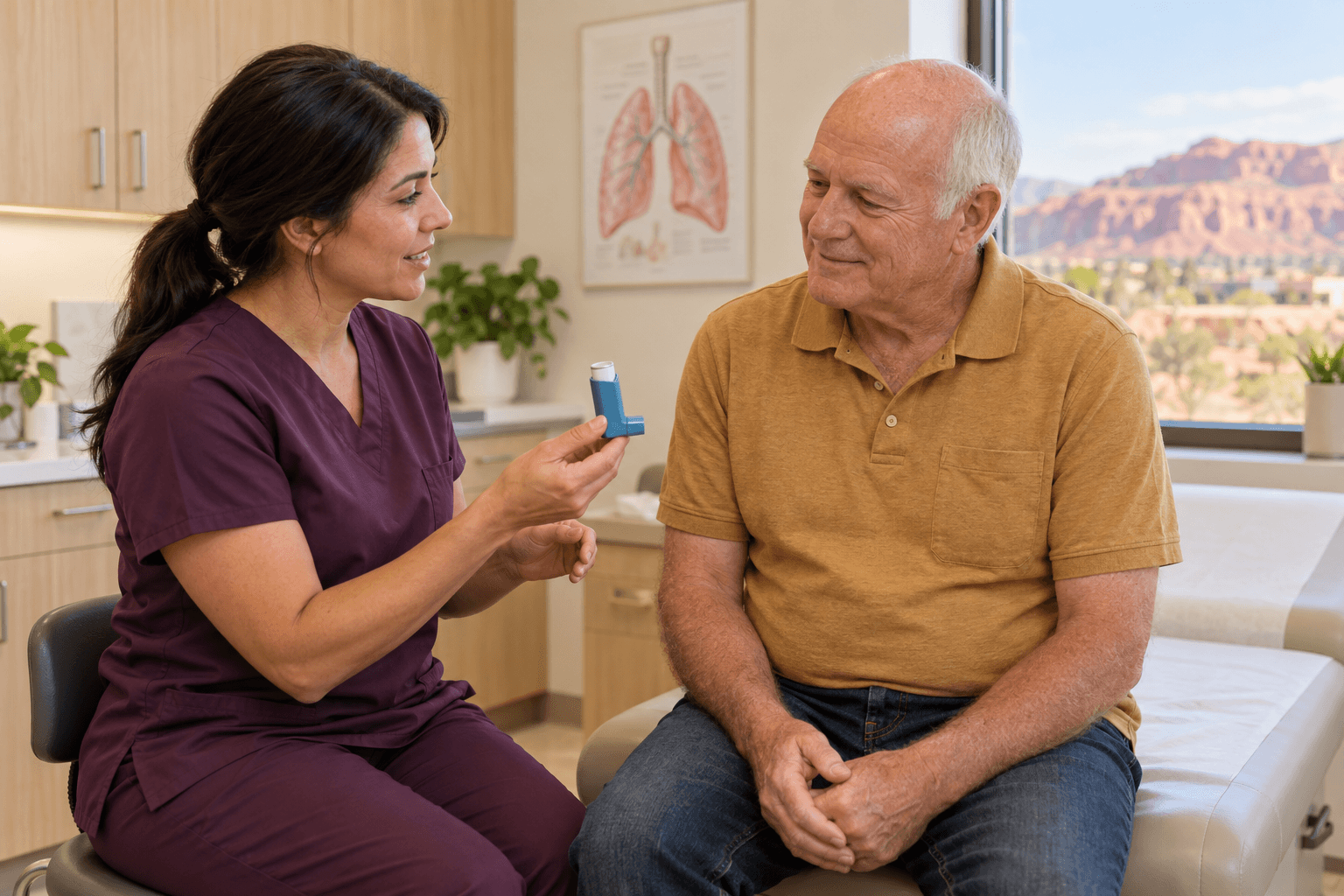
Medication reviews give us an opportunity to discuss what you take, how you use it, and whether the plan is manageable. Bring your inhalers to the appointment so we can review the devices and discuss technique, prescribed instructions, and any problems you have noticed. Side effects, cost, or confusion between medications can make treatment difficult to follow. When several conditions or treating providers are involved, Complex Care Coordination may help clarify responsibilities and keep recommendations connected.
Changes in your breathing also need to be considered in context. We review recent flare-ups, urgent medical visits, and hospital stays to understand whether your needs have changed. Hospital Follow-Up Visits provide an opportunity to assess recovery and review medication instructions after discharge. We also discuss smoking cessation when relevant, exposure to respiratory irritants, and what to do if symptoms worsen. Depending on your findings, further lung function testing, pulmonary rehabilitation, or evaluation by a pulmonologist may be recommended through an appropriate referral.
Access to ongoing care matters when breathing difficulties or other limitations make travel challenging. For older adults, Senior Care At Home may offer an option for appropriate medical follow-up, subject to availability and the assessment required. Some concerns still need clinic-based testing, specialist evaluation, or urgent attention. At each visit, we aim to explain the next steps clearly, including what to monitor, when to return, and which changes should prompt you to seek help sooner.
Our COPD & Chronic Lung Disease Management Services May Include
Your appointments reflect your diagnosis, symptom patterns, and existing treatment plan. Depending on your individual needs, care may include:
- Respiratory Symptom Reviews
- Medical And Exposure History Reviews
- Prior Lung Function Result Reviews
- Medication And Inhaler Reviews
- Inhaler Technique Discussions
- Smoking Cessation Support
- Respiratory Irritant Avoidance Guidance
- Flare-Up Planning Discussions
Schedule COPD & Chronic Lung Disease Management In St. George, Utah
If a chronic lung condition is affecting your routine, an appointment can help you review what is happening and understand your care options. Peak Medical supports patients in St. George, Utah with personal attention to breathing concerns, medication questions, and ongoing medical needs. Tell our team about your diagnosis, recent changes, and any hospital or specialist care when you contact us. This information helps us understand the purpose of your visit and identify appropriate next steps.
Bring your inhalers, an updated medication list, and any available lung function results or relevant medical records. Notes about symptoms, activity limitations, and questions can also help guide the appointment. Contact Peak Medical to schedule COPD and chronic lung disease management and discuss a follow-up plan that reflects your health needs. If you are experiencing new or worsening breathing problems, let the team know when you call rather than waiting to mention them at a routine visit.
FAQs About COPD & Chronic Lung Disease Management
In St. George, Utah
Managing a long-term lung condition often brings questions about medications, testing, and changes in breathing. These answers explain how Peak Medical approaches COPD and chronic lung disease care in St. George, Utah, and when additional evaluation may be needed.
What is COPD, and how does it differ from other chronic lung diseases?
COPD stands for chronic obstructive pulmonary disease and involves persistent airflow limitation; emphysema and chronic bronchitis are commonly associated with it. Other chronic lung diseases may affect breathing differently, so an accurate diagnosis helps guide the appropriate treatment and follow-up.
How is COPD diagnosed?
Diagnosis involves reviewing symptoms and medical history, performing an examination, and assessing lung function. Spirometry is a key test used to confirm airflow obstruction, and your provider can discuss whether testing or further evaluation is appropriate.
Can my primary care provider help manage COPD?
Primary care can support ongoing symptom assessment, medication reviews, preventive care discussions, and follow-up for related health conditions. Depending on the complexity of your needs, your provider may also work with a pulmonologist or recommend specialist evaluation.
Can you review my inhalers and how I use them?
Bring your prescribed inhalers to your appointment so we can discuss how you use each device and review any difficulties with the instructions. Let us know about side effects, cost concerns, or trouble operating the inhaler, since these can affect your ability to follow the treatment plan.
How often should I schedule follow-up visits?
The appropriate schedule depends on your symptoms, treatment, recent flare-ups, and other medical needs. Your provider may recommend an earlier review after a medication change or hospital stay rather than waiting for your next routine appointment.
Can I develop COPD if I have never smoked?
Yes, COPD can occur in people who have never smoked. Long-term exposure to certain dusts, fumes, or air pollution, as well as genetic factors, can contribute, so a complete exposure and family history is useful.
When might I need to see a pulmonologist?
A pulmonologist may be recommended when the diagnosis is uncertain, symptoms remain difficult to manage, or specialized testing or treatment is needed. Your primary care provider can continue supporting your overall health while coordinating with the specialist.
What should I do if my breathing suddenly gets worse?
Follow any individualized action plan you have been given and seek prompt medical advice for a change from your usual symptoms. Severe difficulty breathing, blue or gray lips, new confusion, or inability to speak because of breathlessness requires emergency help; call 911 rather than waiting for an appointment.